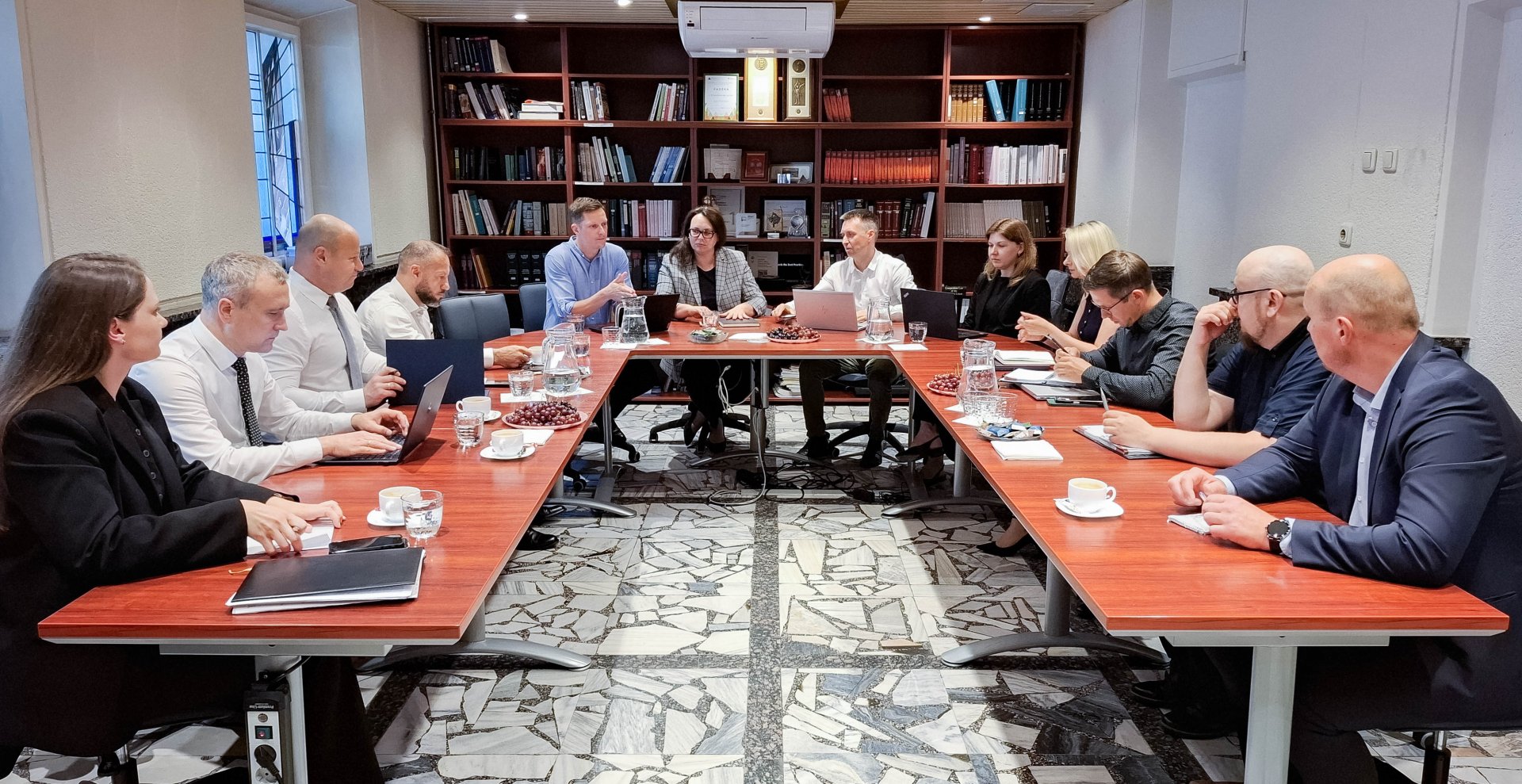
At a meeting held yesterday, the heads and experts of the Competition Council, the Special Investigation Service (STT) and the Public Procurement Office (PPO) discussed current public procurement issues, with considerable attention devoted to procurement in the strategically important defence sector.
Effective interinstitutional cooperation with the Ministry of National Defence was one of the issues raised during the meeting. Representatives of the three institutions agreed that it is important not only to ensure effective oversight of public procurement and acquisitions in the defence sector, but also to continue providing expert support to the Ministry so that procurement processes can be organised as smoothly as possible, while properly managing potential risks and preventing possible breaches of the law.
The trilateral meeting also addressed opportunities for cooperation between the institutions and for exchanging public procurement data. Such data could help to assess competition risks in public procurement more effectively, identify areas requiring greater attention and strengthen the prevention of potential infringements.
The participants agreed to continue strengthening interinstitutional cooperation, exchanging relevant information and coordinating their actions in order to ensure transparent and efficient public procurement.
Given the strategic importance of this area, the level of funding allocated to it and the potential impact of corruption-related offences on national security, the STT gives priority attention to the fields of national security and defence in its investigations of corruption-related criminal offences, corruption prevention activities, analytical anti-corruption intelligence and efforts to raise public anti-corruption awareness.
The Competition Council, the STT and the PPO signed a trilateral cooperation agreement in February 2017. Under the renewed trilateral cooperation model, regular meetings of the institutions’ heads and experts are held and joint areas of activity have been established in order to make even more effective use of the institutions’ respective expertise and capacities in providing mutual expert support.