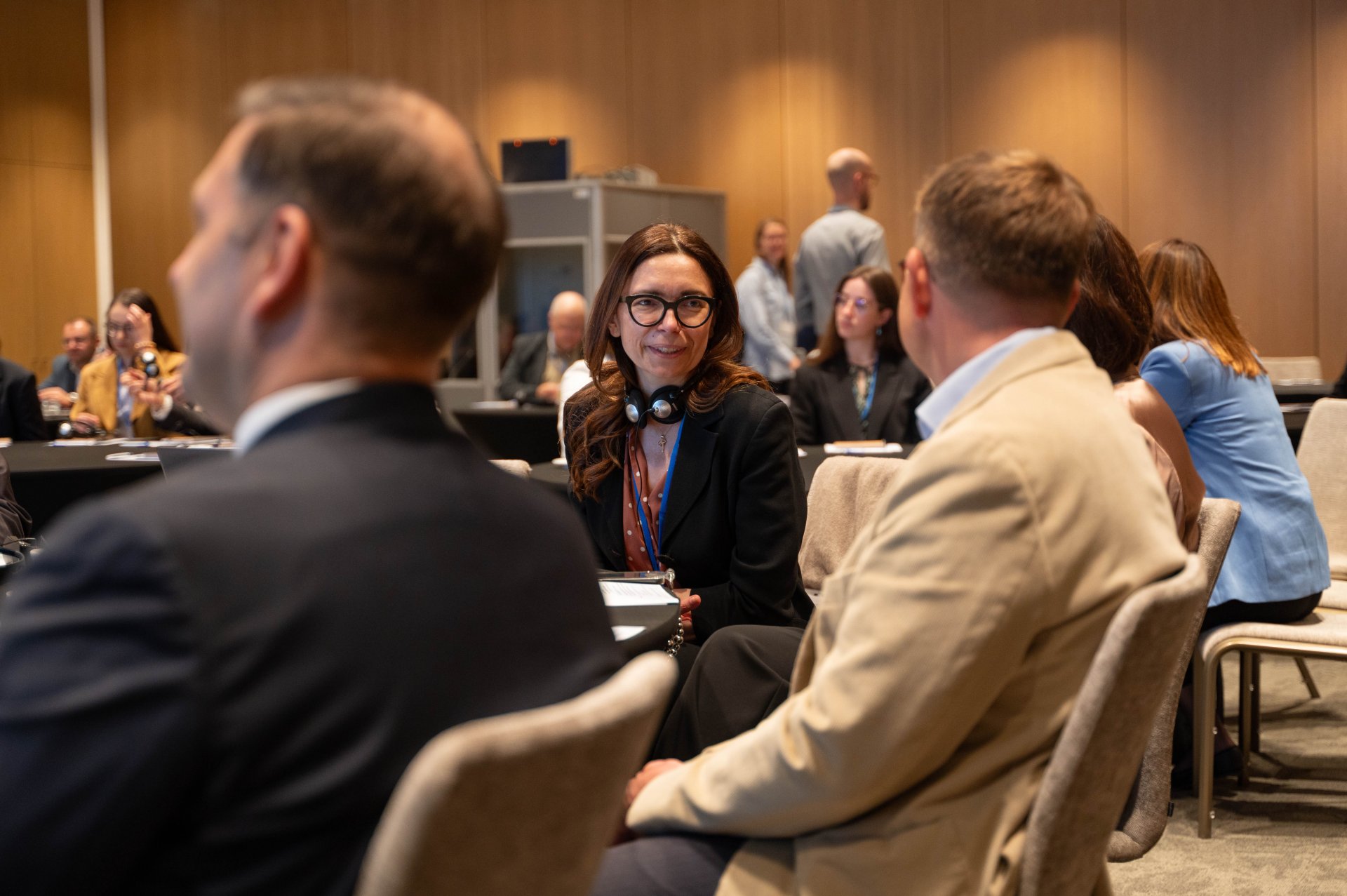
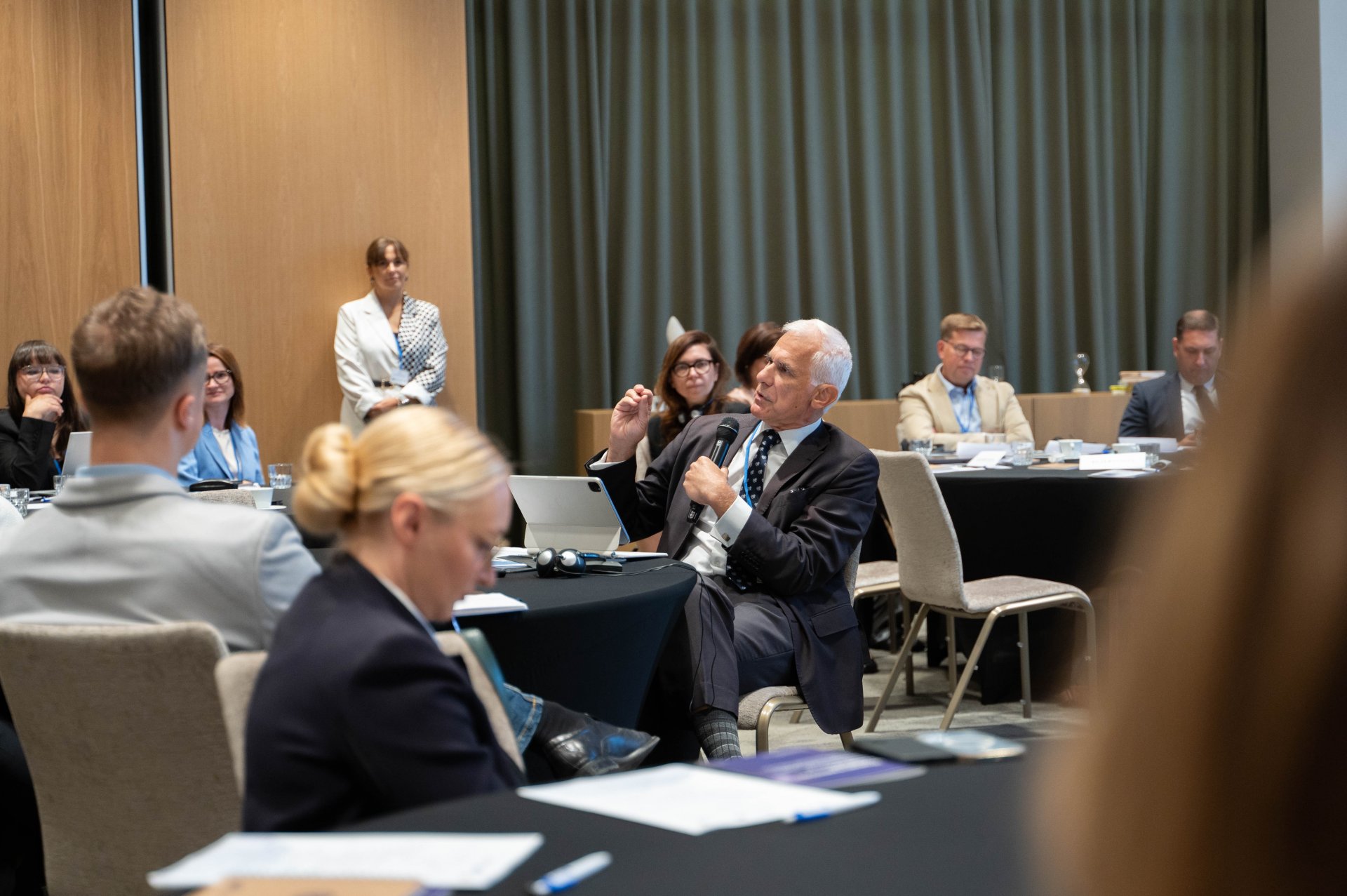
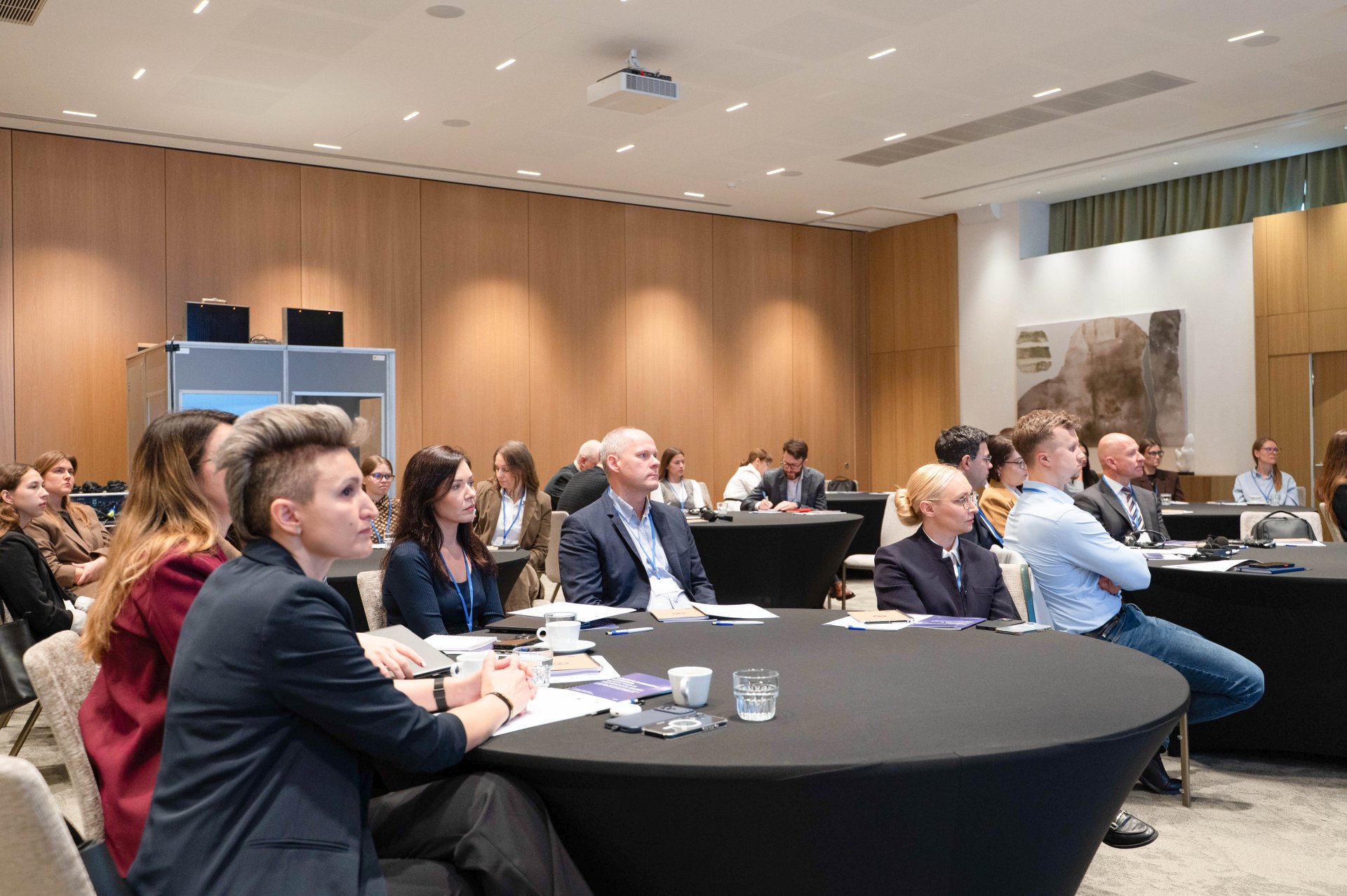
As part of a project funded by the Internal Security Fund (ISF), the Special Investigation Service (STT) held a seminar in Vilnius entitled “The Role of the Private Sector in Combating Corruption and Bribery in International Business Transactions”. Representatives of Lithuanian businesses, business associations, international organisations and the public sector discussed how to strengthen business resilience to corruption and ensure that integrity and compliance principles are embedded not only in corporate policies, but also in companies’ day-to-day operations.
The seminar was organised as part of the STT project “Prevention and Detection of Corruption, Including Bribery, in International Business Transactions” (ISF/2023/331), funded by the Internal Security Fund. Particular attention was devoted to corruption risks associated with international business transactions, the prevention of foreign bribery, corporate internal control and compliance systems, third-party due diligence, and risk management when operating in foreign markets.
Opening the event, STT Director Linas Pernavas emphasised that building a business environment resilient to corruption requires not only effective legal measures, but also active cooperation between the public and private sectors.
“We are seeing a positive shift in attitudes within the business community. According to the latest Lithuanian Map of Corruption survey, 80 per cent of company representatives say they would not pay a bribe under any circumstances. However, strong attitudes and effective safeguards are not the same thing – only around half of the companies surveyed still apply anti-corruption measures. The key challenge today is therefore to help businesses turn positive attitudes into everyday organisational practice by implementing effective compliance systems that help identify risks, protect reputation and strengthen trust,” said STT Director Linas Pernavas.
Tanya Khavanska of the Anti-Corruption Division of the Organisation for Economic Co-operation and Development (OECD) spoke about international business integrity standards and how companies can implement them in practice. Her presentation covered the OECD Convention on Combating Bribery of Foreign Public Officials, the OECD’s 2021 recommendations for businesses, as well as the key elements of effective internal control, ethics and compliance programmes.
STT Deputy Director Elanas Jablonskas presented the Lithuanian perspective, addressing corruption prevention priorities, the expectations of public authorities towards businesses, the corruption prevention tools available to companies, and opportunities for closer cooperation between the public and private sectors.
The seminar also placed strong emphasis on companies’ own practical experience. During the discussions, business representatives examined which areas of corporate activity are most vulnerable to corruption risks, the challenges companies face when operating in foreign markets or managing subsidiaries, and what forms of public-sector support and practical tools businesses need to strengthen organisational integrity.
Practical experience from international companies was shared by Tetiana Isaieva, Compliance Head for the EEMEAIS region at Hoffmann-La Roche AG, and Rauno Hoffmann, Head of Ethics, Risk and Compliance for the European region at Novartis. The speakers explored how compliance principles can be translated into everyday business practice, the role of leadership in building a culture of integrity, and ways of managing risks associated with intermediaries, suppliers, business partners, sales and procurement processes, and high-value transactions.
One of the seminar speakers, Nicola Bonucci, an independent anti-corruption expert and member of the Foundation Board of the Basel Institute on Governance, addressed the foreign bribery risks faced by companies operating internationally. His presentation focused on corporate liability, international enforcement trends, and a risk-based approach to bribery prevention.
Seminar participants also examined specific higher-risk situations, including working with third-party intermediaries and agents, public procurement, obtaining licences and permits, gifts and hospitality, international joint ventures, and business expansion into new markets.
A separate part of the event was dedicated to practical work in small groups. By analysing different international business transaction scenarios, participants considered how to identify potential corruption risks, what questions should be asked when making business decisions, and which risk mitigation measures should be applied.
At the end of the seminar, representatives of international companies shared lessons learned from real-life business situations, including how corruption risks are identified and managed, what dilemmas arise in decision-making, and how practical experience can help strengthen corporate compliance systems.
The seminar served as a platform for dialogue between the public and private sectors on their shared responsibility for creating a business environment resilient to corruption. The discussions demonstrated that effective corruption prevention in international business goes beyond having formal rules and procedures in place. What matters is that they are consistently applied in day-to-day operations and that the principles of integrity become an integral part of organisational culture and business decision-making.
More photos can be found here.