In Lithuania, a decrease in corruption experience and an increase in transparency are being observed, particularly through the opening of state-managed data. These trends are reflected in the results of the National Corruption Index (NCI) for the years 2018–2024. The NCI is an analytical tool developed by the Special Investigation Service (STT) to monitor the anti-corruption environment, assess the national corruption situation, and track its changes over time.
Since 2018 – Positive Overall Progress in the Anti-Corruption Environment
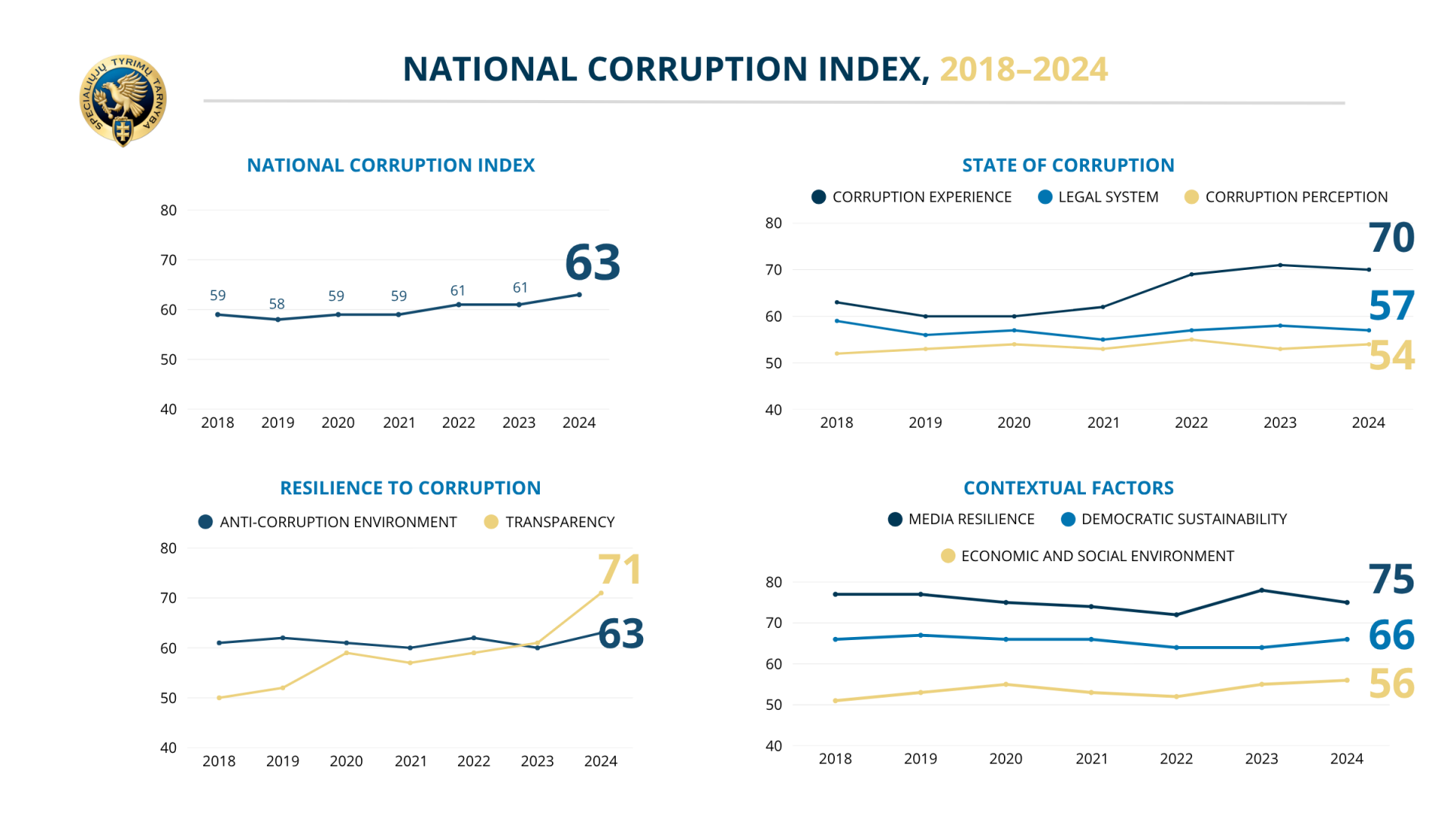
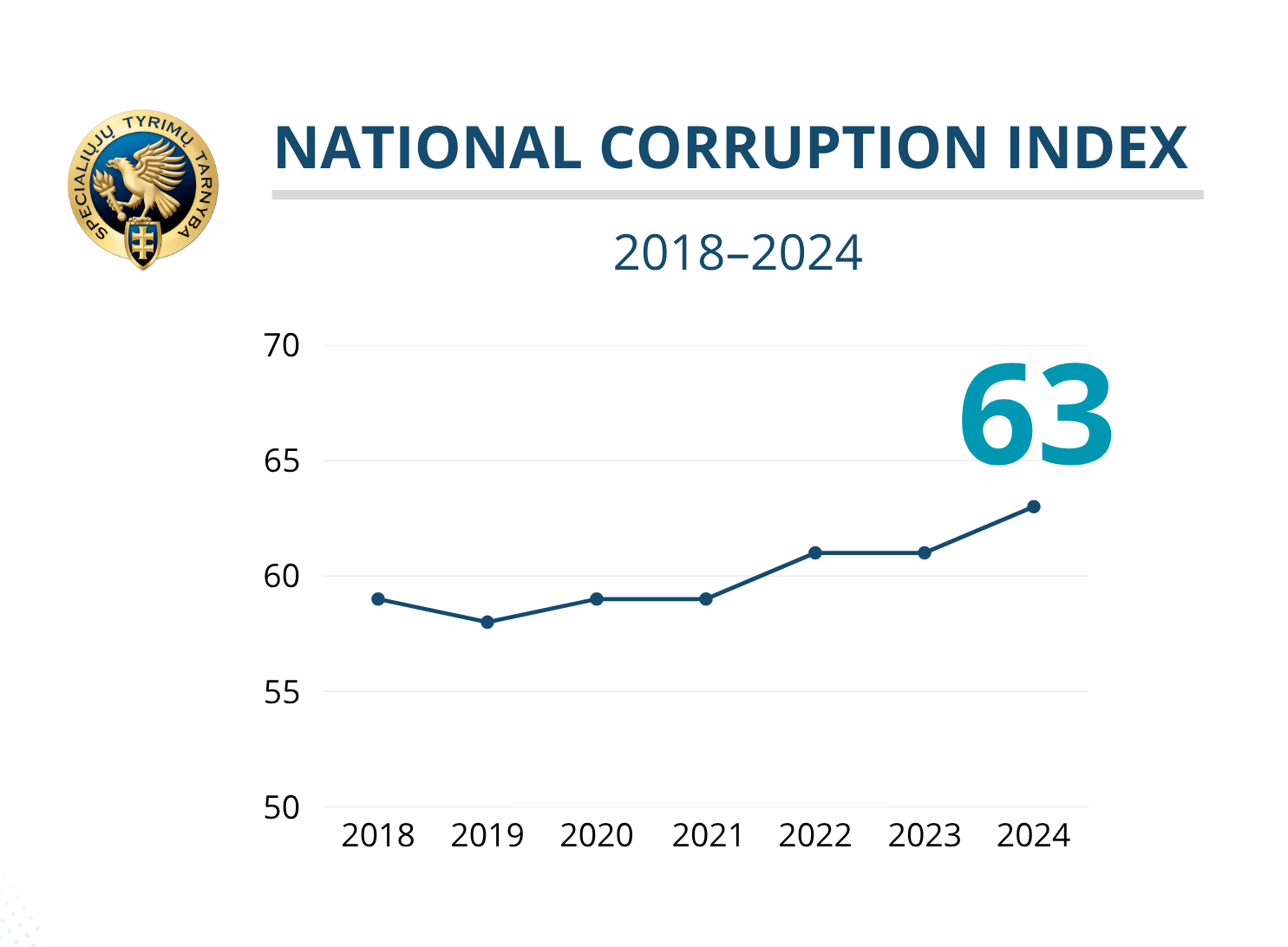
According to the 2024 study data, the overall National Corruption Index (NCI) score stands at 63 points out of 100. Compared to 2018, when the index was 59 points, a consistent upward trend is observed.
Three key factors have contributed most to this growth:
- Decrease in corruption experience – the score in this area increased from 63 to 70 points over six years. This positive change was driven by a decline in petty corruption in the provision of public services and fewer encounters with potential corruption in the public sector.
- Strengthened government transparency measures – the score rose from 50 to 71 points, reflecting significant progress in open data initiatives and the expansion of e-government solutions.
- Strengthening of the economic and social environment – the score increased from 51 to 56 points, mainly due to overall economic growth and rising household incomes in the country.
Despite Progress, Some Areas Lack Significant Breakthroughs
Although the overall NCI trend remains positive, changes in certain indicators are still limited:
- The legal system score continues to lag behind the overall NCI score, fluctuating between 55 and 59 points over the past seven years. While experts note that Lithuania’s legal system is of high quality and public awareness of the inevitability of accountability for corruption-related crimes is growing, these positive developments have yet to significantly improve overall public trust in the legal system.
- Public perception of corruption remains higher than actual corruption experience — in 2024, the gap between these indicators stood at 16 points. This means that although most people do not personally encounter corruption, they still tend to perceive it as a widespread phenomenon. Such a discrepancy may be influenced by extensive media coverage of high-profile cases, high societal expectations for transparency, and a critical view of government performance. In other words, corruption perception reflects not only personal experience but also broader societal attitudes shaped by the information environment and the general level of trust in state institutions.
- Assessment of the anti-corruption environment has remained stable (60–63 points). Intolerance toward corruption among the public and business representatives is growing, although the culture of reporting corruption in Lithuania could still be strengthened.
Media Independence and Democratic Resilience — the High Scoring Areas
Among the factors influencing corruption prevalence, two indicators — media resilience and democratic sustainability — have consistently maintained high ratings tthroughout the observation period: 72–77 points and 64–67 points, respectively. Over the period assessed, media independence and democratic resilience in Lithuania persisted, despite global trends of democratic decline. These indicators form essential foundations for building an anti-corruption environment, as an independent media reinforces public accountability, while democratic sustainability suports transparent decision-making.
The National Corruption Index is constructed from 105 variables drawn from 25 different research sources—ranging from public and business surveys to data from international organizations (the European Commission, the OECD, and the World Bank). It assesses three dimensions: the state of corruption, resilience to corruption, and contextual factors relevant to anti-corruption. Results are indexed on a 0–100 scale, where 0 denotes the lowest value and 100 the highest possible score.