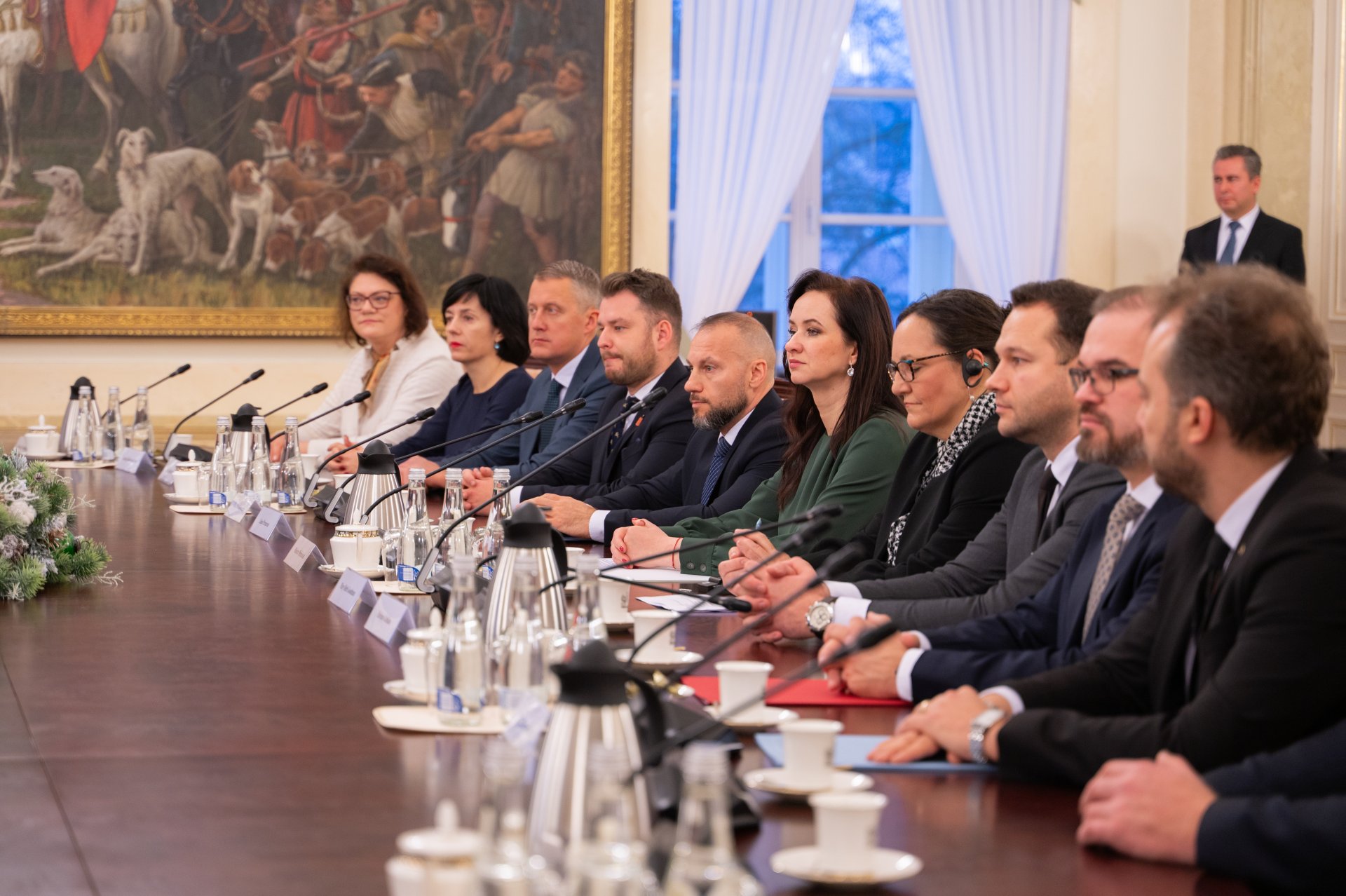
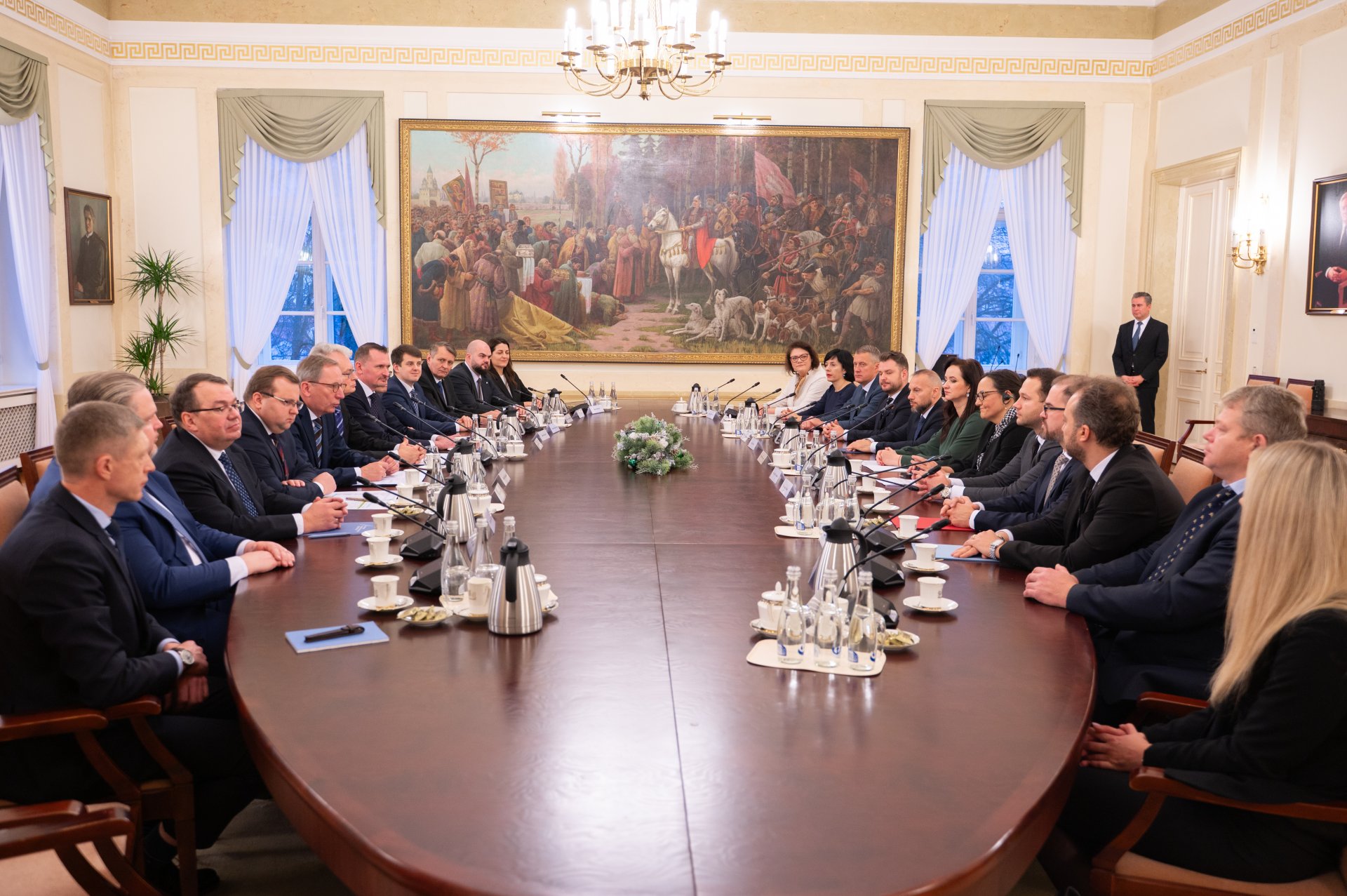
Although Lithuania continues to improve its anti-corruption environment, a lack of political leadership in corruption prevention remains evident. Marking International Anti-Corruption Day, the President of the Republic of Lithuania Gitanas Nausėda, Prime Minister Inga Ruginienė, ministers, OECD Deputy Secretary-General Mary Beth Goodman, and Director of the Special Investigation Service (STT) Linas Pernavas convened for the first time in a Transparency Dialogue. The discussion highlighted that, to maintain Lithuania’s progress and strengthen public trust in state institutions, systematic implementation of anti-corruption measures across all areas of governance is essential – ensuring that corruption prevention becomes a political priority.
“Each of us here can and must act, taking personal and political responsibility for building a transparent environment. I will spare no effort in ensuring that anti-corruption and integrity become part of the daily political agenda. I hope that this and future meetings held in the Transparency Dialogue format will contribute to this goal,” said President Gitanas Nausėda.
“Together we can achieve more. That is why we are strengthening close and continuous cooperation between the Government and the STT to ensure a systemic, coordinated, and results-oriented approach to reducing corruption risks in the country. Aligning the actions of public institutions in corruption prevention is essential,” emphasised Prime Minister Inga Ruginienė.
Strengthening the anti-corruption environment is important not only nationally but also internationally. According to OECD data, Lithuania’s indicators for regulating and implementing anti-corruption policies exceed the OECD member-state average. For twelve consecutive years, the Transparency International Corruption Perceptions Index has shown steady national progress. Transparency and accountability are vital elements of state resilience.
“ Anti-corruption and integrity efforts are a collective responsibility, and a necessary foundation for effective governance, business certainty and economic prosperity. When integrity frameworks are strong and consistently enforced, citizens prosper and markets function more fairly,” stated OECD Deputy Secretary-General Mary Beth Goodman.
“We have gathered today to make corruption prevention a political priority. This requires leadership and engagement from all institutions. Too often we ignore prevention and choose to deal only with the consequences – to investigate and punish rather than prevent. By doing so, we risk public trust and weaken the resilience of the state at a time when it is needed most. The STT is a committed partner: we have identified corruption risks within areas managed by ministries and provided recommendations on how to reduce them. We will continue this work. I want today to mark a decisive turning point – one that makes transparency a genuine national priority,” said STT Director Linas Pernavas.
During the meeting, participants discussed the need to effectively use an existing tool – the Government Commission on Corruption Prevention – which can ensure high-level and continuous attention to corruption prevention. Ministries were encouraged to transition to real preventive action by implementing the STT’s Strategic Anti-Corruption Guidelines. Every minister must be aware of the corruption risks within their sector, take concrete actions to mitigate them, and assume responsibility for results. The STT will continue identifying corruption risks and providing recommendations tailored to each ministry’s area of governance.
The STT also invited ministers to take an active role in developing the 2026–2029 implementation plan for the National Anti-Corruption Agenda for 2022–2033, ensuring its effectiveness and impact.
This was the first meeting of its kind. The intention is to hold such meetings annually.