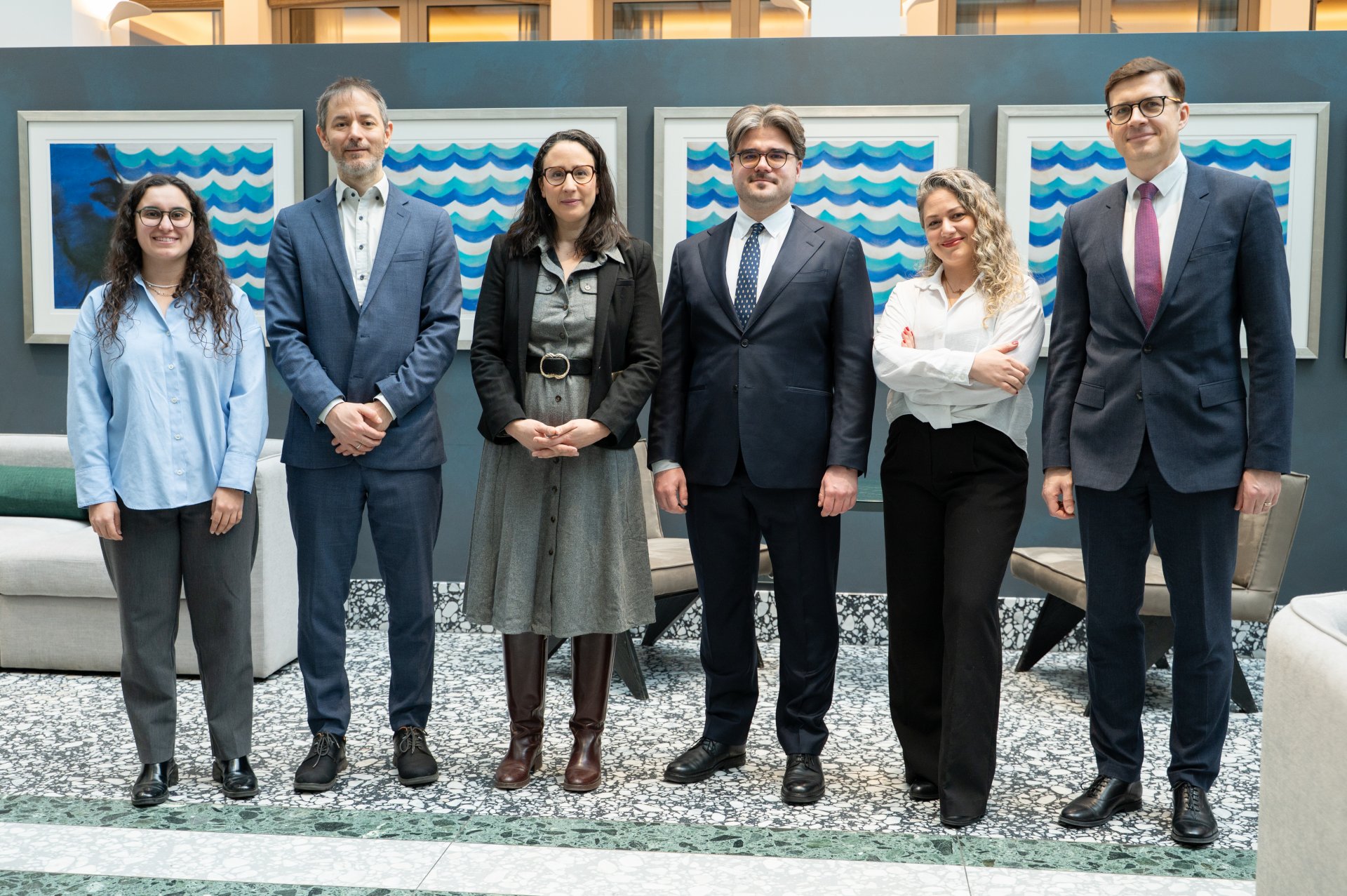
The Special Investigation Service of Lithuania (STT), in cooperation with the Organisation for Economic Co-operation and Development (OECD), has completed a European Commission-funded project under which an AI-based pilot model for assessing fraud and corruption risks in public procurement was developed. The model will help identify potential public procurement risks on a large scale and strengthen preventive oversight. The project’s closing conference took place in Vilnius on 24 February.
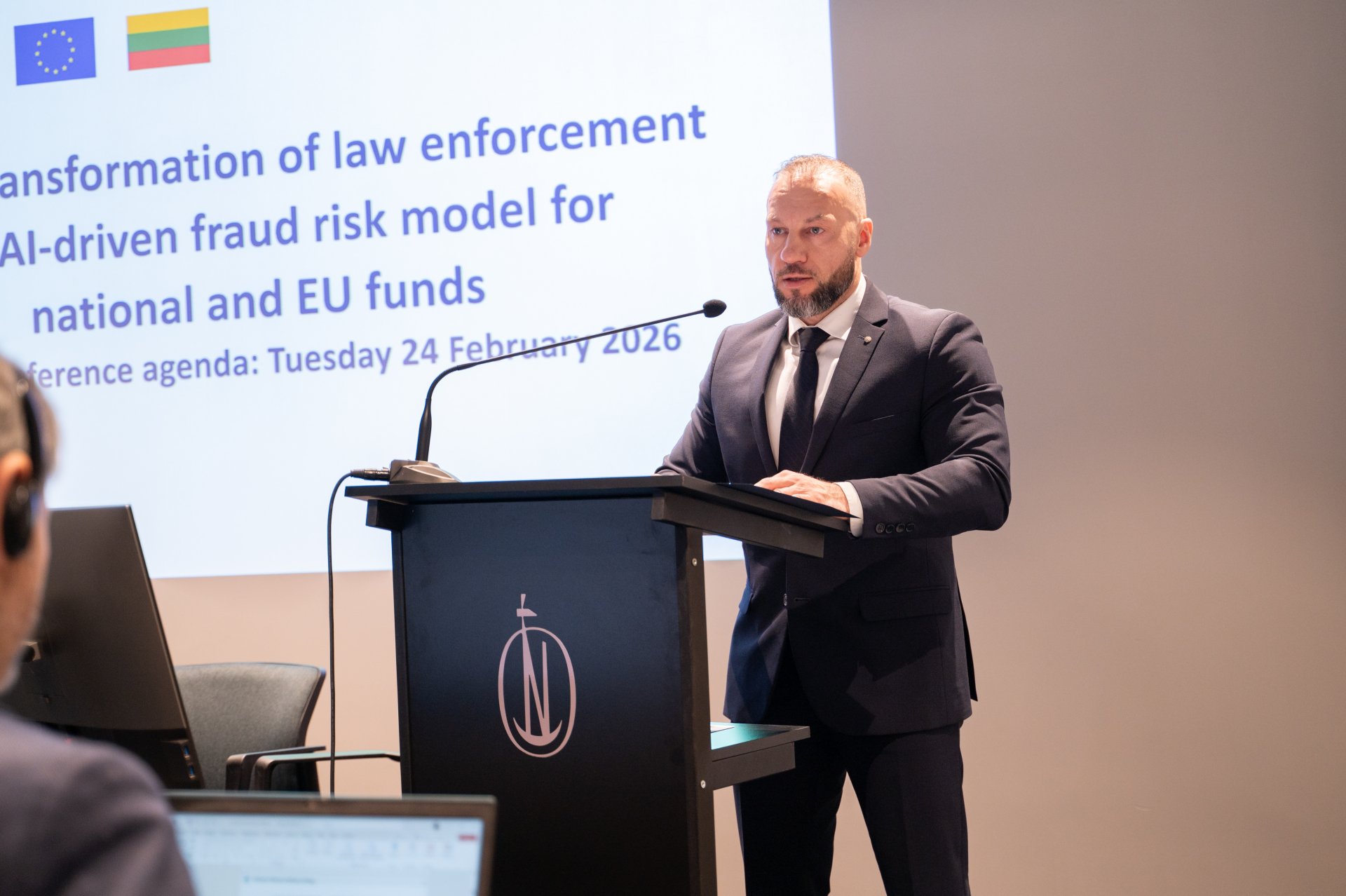
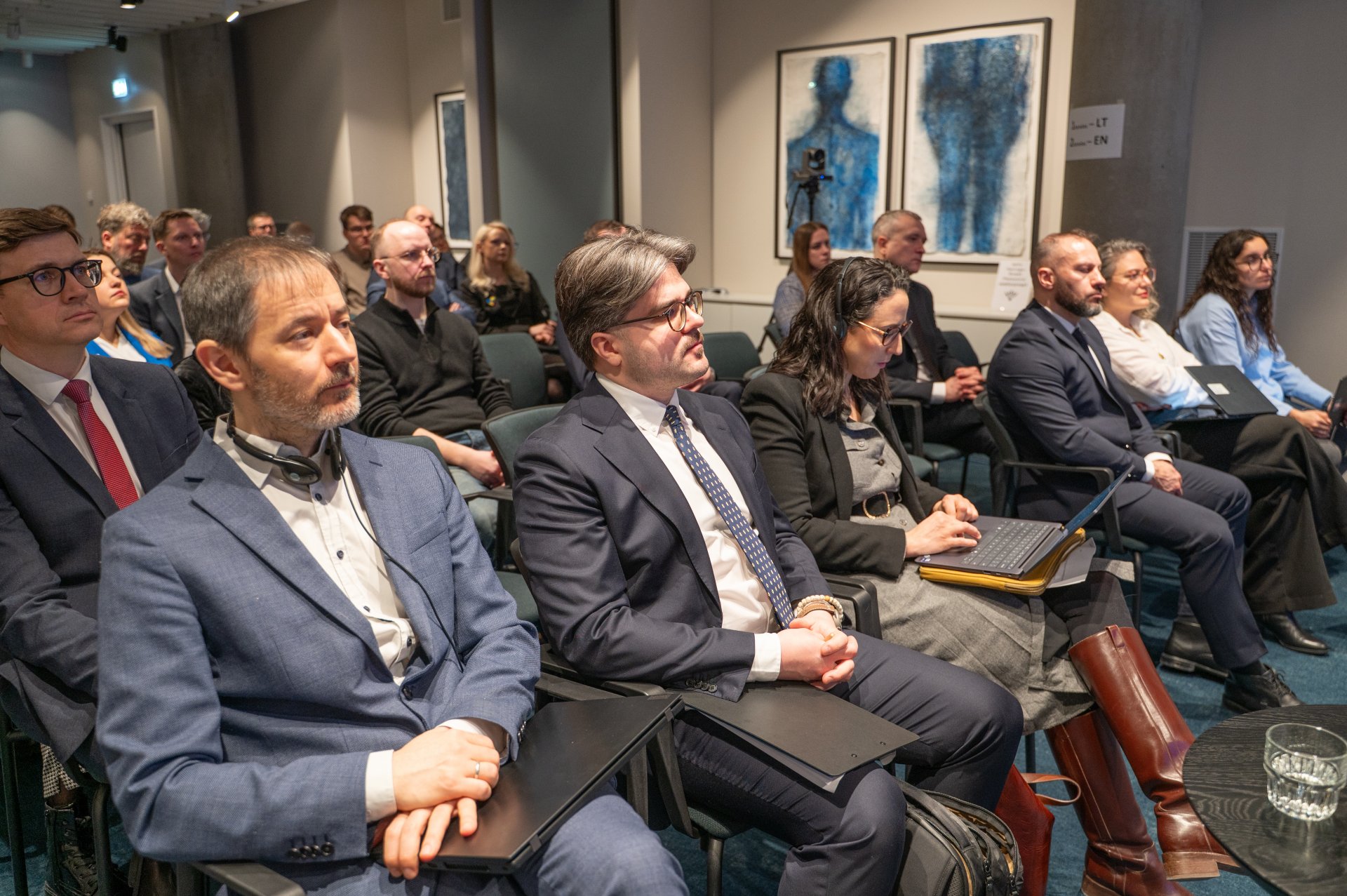
During the final conference held in Vilnius on 24 February, OECD experts presented the implementation process and key results of the project, and discussed further directions for the development of the model and future cooperation. The event was attended by representatives of STT and partner institutions, while members of the European Commission and the EPAC/EACN network of European anti-corruption and police oversight authorities joined remotely.
As part of the project “Deployment of Digital Innovations in Law Enforcement and Development of an AI-Based Model for Identifying Corruption Risks in the Use of Public and European Union Funds”, funded by the European Commission’s Technical Support Instrument, OECD experts and researchers from the Government Transparency Institute developed a pilot AI-based model for assessing fraud and corruption risks in public procurement. The model employs advanced data analytics and machine learning methods that integrate and analyse data from various state registers and information systems. This will enable the systematic identification of potential risk indicators, prioritisation of cases for more detailed assessment, and strengthening of preventive oversight before possible violations or criminal offences occur.
The project also made a significant contribution to strengthening STT’s data governance. OECD experts provided consultations on improving data governance, developing a risk assessment methodology, and implementing international best practices.
“Public procurement remains one of the areas most exposed to corruption risks. Given the scale of public procurement in the country and the complexity of related processes, it is essential to apply advanced analytical methods based on data analysis in order to detect risks not only in individual decisions but also in recurring patterns. By implementing this project, we have taken an important step in strengthening the Service’s analytical anti-corruption intelligence capacities. The adapted model will allow for more efficient and systematic assessment of risks related to the use of the state budget and European Union funds. This will help not only to identify potential violations more promptly but also to apply targeted preventive measures. The model will also reinforce data-driven decision-making and enhance inter-institutional cooperation,” – said STT Director Linas Pernavas.
Given that Lithuania is currently receiving and will continue to receive significant EU investments in the coming years, including funds under the Recovery and Resilience Facility, the new model provides additional safeguards for transparent and responsible management of public finances. Transparent and efficient use of these funds is directly linked to public trust in the state, its institutions, and their ability to ensure sound financial management. This is particularly relevant in the context of increasing investments in strategically important areas, including national defence.
The AI-based model is designed to help identify potential risk indicators and process large volumes of data more efficiently; however, final decisions will remain based on expert analysis.
The model will continue to be further developed and implemented in practice. Its targeted application will help strengthen the state’s analytical and preventive capacities, enable timely identification of risks, and ensure transparent use of public funds.
The project was implemented from September 2024 to March 2026. It was carried out by the Organisation for Economic Co-operation and Development, with the Special Investigation Service of Lithuania as the beneficiary.
More photos